1At a glance
- Procedure time
- About 10 minutes
- Anaesthesia
- Usually none — a very fine needle; numbing cream if you prefer
- Back to work
- Straight away
- Exercise
- After 24 hours
- Results
- Start in 3–5 days; full effect at 2 weeks
- How long it lasts
- Usually 3–4 months
2Before your treatment
Specific to this procedure
- Tell us if you are pregnant, breastfeeding or planning a pregnancy — Botox is not given at these times.
- Tell us about any muscle or nerve condition (such as myasthenia gravis) and any antibiotics you are taking.
- Avoid alcohol, aspirin and anti-inflammatory painkillers for 24–48 hours before, to reduce bruising.
- Book at least 2 weeks before an important event, so the full effect is there in time.
3After your treatment
First 4 hours
- In the first hours the Botox is still settling into the muscles. These rules keep it where it was placed, so it does not move to nearby muscles (which can cause a drooping eyelid or brow).
- Stay upright — do not lie down, bend forward or put your head down for 4 hours.
- Do not touch, rub or massage the treated areas.
- Avoid pressure on the treated areas: no tight caps, headbands or face masks.
First 24 hours
- No gym, exercise or heavy lifting — raised blood flow and straining can move the Botox.
- No sauna, steam, hot yoga or very hot showers.
- No alcohol.
- Make-up can be applied gently after 4 hours.
- No facials, facial massage or laser treatments for 2 weeks.
What to expect
- Small bumps at the injection points settle within 30 minutes; a small bruise is possible.
- A mild headache on the first day can happen and passes on its own.
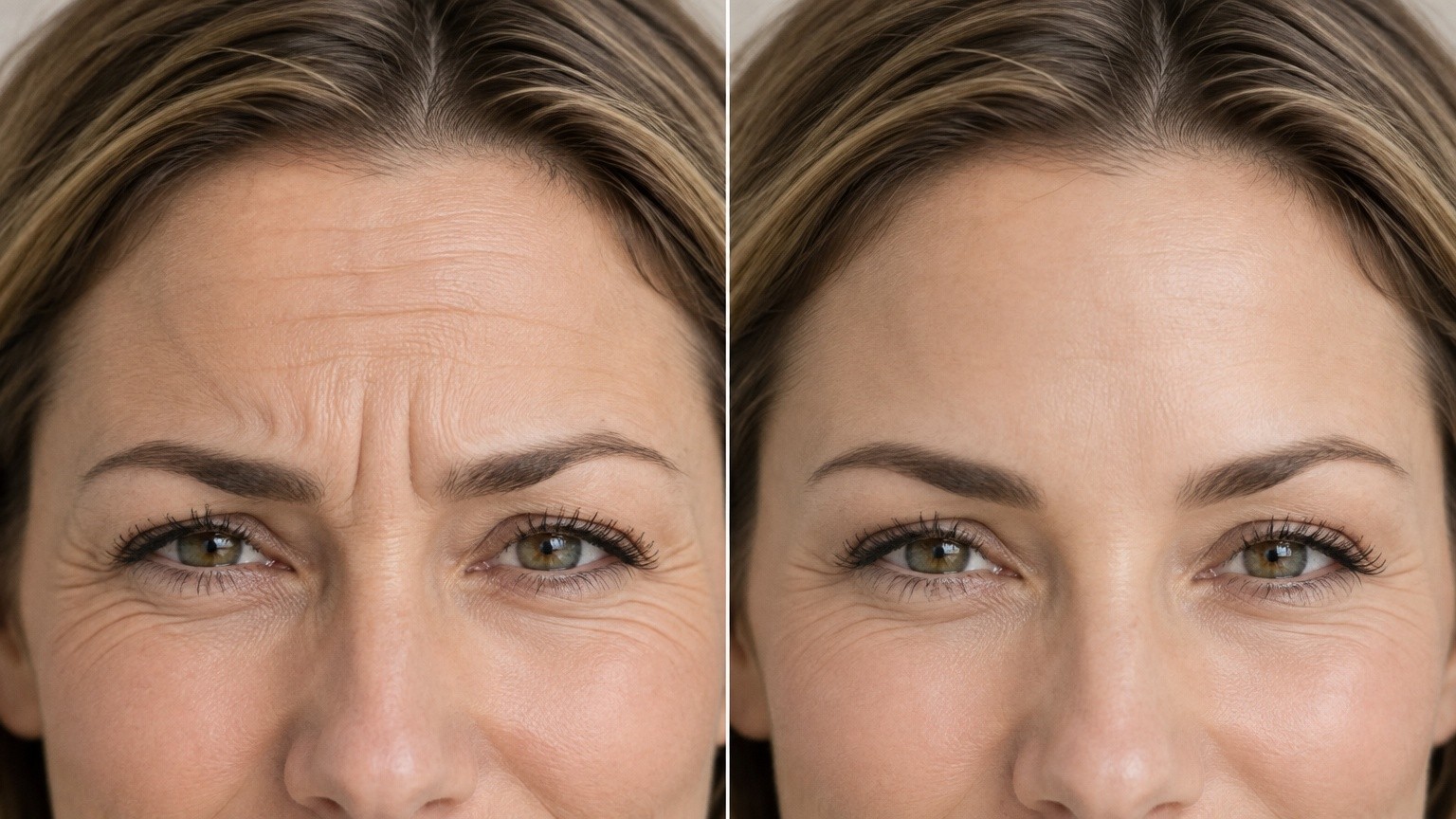
- The effect starts in 3–5 days and is complete at 2 weeks — we review you then and adjust if needed.
4Your recovery, week by week
- First 30 minutesSmall bumps at the injection points fade.
- Day 3–5The muscles begin to relax.
- Week 2Full effect; review and touch-up if needed.
- Months 3–4The effect wears off gradually; time for your next session.
5Follow-up visits
- 2 weeks after your procedure
Call us straight away if you notice
A drooping eyelid or eyebrow, or an uneven smile — contact us; it is temporary and we can often help.
Difficulty swallowing, speaking or breathing, or blurred or double vision — this is very rare; get urgent medical help (998), then tell us.
Increasing redness, heat, swelling or pain after the first 2–3 days, pus, or a fever.
Anything you are worried about — send us a photo on WhatsApp and we will advise you.
Chest pain, difficulty breathing, or heavy bleeding that will not stop: call 998 (ambulance) or go to the nearest emergency department, then let us know.
Questions while you recover
Message or call the clinic any time — no question is too small, and it is always better to ask early.
Questions while you recover — Message or call the clinic any time — no question is too small, and it is always better to ask early. +971 50 108 8378 (WhatsApp) · info@eyas.doctor
This guide gives general advice. Dr. Eyas may give you instructions made just for you — at your consultation or when you go home after surgery. If his instructions are different from this guide, follow his instructions. If you are not sure, message us. Last reviewed: November 2026.